
Are We Prepared for Jesus' Return, or Are We Living Like the Foolish Virgins?
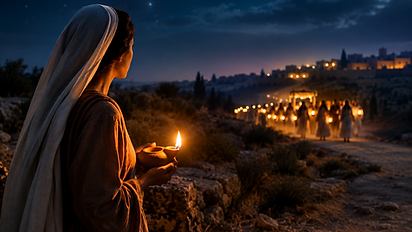
There is a parable Jesus told that I believe we need to examine more seriously in our generation. It is the Parable of the Ten Virgins in Matthew 25:1-13. I have read this passage before, heard it preached, and probably thought about it in the same way many Christians do. We understand that five virgins were wise and five were foolish. We know that the wise ones carried extra oil, while the foolish ones did not. We know that the bridegroom delayed, and when he finally arrived, those who were ready went in with him to the wedding feast. The others were left outside.
But lately, I have found myself looking at this parable differently. Rather than simply asking who the foolish virgins were, I have started asking a more uncomfortable question: What if the way many of us Christians are living today is closer to the foolish virgins than we would like to admit?
I do not ask this question to condemn anyone. I ask it from a place of personal observation and conviction. When I look at the state of the Church, the things that occupy our attention, the way we approach our relationship with God, and the general attitude many of us have towards the return of Jesus Christ, I cannot help but wonder whether we have become too comfortable with the idea of being Christians without taking the preparation for eternity as seriously as we should.
We Know the Bridegroom Is Coming, Yet We Live as Though He Is Delayed Forever
One thing that strikes me about this parable is that all ten virgins knew the bridegroom was coming. The difference was not that five believed in his arrival and the other five did not. All ten were waiting for him.
This is where the parable becomes particularly relevant to us.
We believe Jesus is coming again. We hear sermons about His return. We read Bible passages about the end times. We share prophetic messages and discuss the signs of the times. Some of us even warn others that the world is changing and that we need to prepare ourselves spiritually.
Yet, how many of us actually live each day with the seriousness that such a belief demands?
We make plans as though we have unlimited time. We postpone repentance. We delay forgiving people. We continue entertaining habits we know are displeasing to God, telling ourselves that we will deal with them eventually. We know the things we ought to change, but we keep putting them off.
We say we want to grow spiritually, but prayer is often the first thing we sacrifice when life becomes busy. We say we want to know God more deeply, but we can spend hours on our phones, following every trending topic, watching videos, discussing other people's lives, and consuming entertainment, only to discover that we have barely spent any meaningful time with the Lord.
Of course, there is nothing inherently wrong with planning for the future, using technology, enjoying wholesome entertainment, or going about our daily responsibilities. The problem begins when these things gradually take the place that belongs to God.
I have come to believe that one of the greatest dangers facing Christians is not necessarily the open rejection of God, but the quiet postponement of our relationship with Him.
We are not saying that we do not believe. We are simply living as though there will always be another opportunity to become serious.
But what if we have misunderstood the meaning of waiting for the bridegroom?
Having a Lamp Is Not the Same as Having Enough Oil
One detail in this parable deserves our attention. The foolish virgins had lamps. They were part of the group waiting for the bridegroom. They were not complete strangers who had wandered into the wedding procession by mistake.
They had the outward appearance of people who were prepared.
This is a sobering thought because it is possible to look spiritually prepared without taking the necessary steps to remain prepared.
We can attend church every Sunday, own several Bibles, listen to sermons throughout the week, share Bible verses on social media, sing in the choir, preach from the pulpit, and even hold positions of responsibility in the Church. These things can be valuable expressions of our faith, but none of them should be mistaken for a substitute for a living relationship with God.
We can know Christian language without practising Christian obedience. We can talk about holiness while secretly protecting the very things that are weakening our spiritual lives. We can encourage others to pray while our own prayer lives are neglected. We can tell people to trust God while allowing fear, bitterness, envy, pride, and the desire for approval to govern our decisions.
This is the part that challenges me personally. It is easy to look at the foolish virgins as though they were an entirely different group of people from us. It is much harder to examine our own lives and ask whether our Christianity has become more about appearance than preparation.
A lamp can be visible to everyone, but the condition of the oil is not always visible to the people around us.
The question is not simply whether people know that we are Christians. The question is whether our lives demonstrate that we are growing in Christ, walking in obedience, pursuing holiness, and allowing the Holy Spirit to transform us.
Our public Christianity cannot replace our private walk with God.
We Are Distracted by Everything Except the One Thing That Matters Most
Consider the world we live in today. We wake up to notifications, messages, breaking news, social media updates, work demands, financial pressures, family responsibilities, and an endless stream of information. Before the day has properly begun, our minds may already be occupied by a hundred different things.
We are constantly connected, yet many of us struggle to maintain a consistent connection with God.
We know what is happening in the lives of celebrities, politicians, public figures, and people we have never met. We know the latest controversies, the newest trends, and the arguments taking place online. We can spend hours debating events in the world, but struggle to spend even a short period in quiet fellowship with the Lord.
I am not suggesting that Christians should withdraw from society or become ignorant of what is happening around them. Our faith should influence how we understand the world and how we respond to its problems. But we must be honest about what is happening to our attention.
Sometimes, the greatest threat to our spiritual readiness is not an obvious temptation. It is the gradual occupation of our lives by things that appear harmless but leave little room for God.
We can become so busy preparing for our careers, building businesses, pursuing education, raising families, growing our platforms, and securing our futures that we neglect the condition of our souls.
All these responsibilities matter. We have duties to fulfil and work to do. But none of them can take the place of being ready to meet the Lord.
Jesus did not tell the parable to encourage His followers to abandon their responsibilities. He told it to teach them to remain ready.
Perhaps we need to ask ourselves some difficult questions. If we examined how we spend our time, what would our schedules reveal about our priorities? If someone observed our private lives for a week, would they see a people preparing for eternity or a people consumed by the temporary things of this world?
These are not questions we should ask merely to feel guilty. They are questions that can help us recognise where we have drifted and return our attention to what matters most.
The Danger of Assuming We Can Always Get Ready Later
In the parable, the bridegroom did not arrive when the virgins expected him. He was delayed, and eventually they all became drowsy and slept. Then, at midnight, the announcement came that the bridegroom was approaching.
The delay exposed the difference between the wise and the foolish.
The foolish virgins had not made adequate provision for the possibility of a longer wait. They had lamps, but they had not prepared for what the delay would require.
I see a warning here for Christians who have become comfortable postponing the things of God.
We tell ourselves that we will become more prayerful when life becomes less stressful. We will deal with our anger when we have more time. We will forgive that person eventually. We will stop compromising when the right opportunity comes. We will become more serious about our faith when we are older, when the children are grown, when the business is established, when the financial pressure has eased, or when we have finished pursuing our ambitions.
But life rarely becomes completely free of demands. One responsibility gives way to another, and the years continue to pass.
Before we realise it, the things we intended to change have become established patterns. The spiritual discipline we planned to develop remains a good intention. The obedience we postponed becomes a habit of disobedience.
And we must remember that the delay of the bridegroom was not proof that he was never coming.
The fact that Jesus has not returned yet does not mean His promise has failed. Neither does the fact that we have lived another day mean we are guaranteed the time we need to put everything right.
James 4:14 reminds us that our lives are like a vapour that appears for a little while and then vanishes away.
We do not know how much time we have. We do not know when our earthly lives will end, and we do not know the day or hour of Christ's return. That uncertainty should not lead us into fear or speculation. It should lead us to live faithfully today.
If there is something God has been convicting us about, why are we waiting? If there is a sin we need to confess, why are we protecting it? If there is a relationship in which we need to seek reconciliation, why do we keep postponing it? If we know our spiritual lives have become cold, why are we comfortable remaining that way?
The wise virgins prepared before the announcement came. They did not wait until the bridegroom arrived to discover that preparation was necessary.
You Cannot Borrow Someone Else's Relationship with God
Another part of the story that I find particularly sobering is what happened when the foolish virgins realised they were running out of oil. They turned to the wise virgins and asked them to share theirs.
But the wise virgins could not provide what was needed without jeopardising their own readiness.
There is an important spiritual lesson here. We can learn from other Christians, receive encouragement from them, and benefit from their prayers and counsel. God uses the Church to strengthen and build us up. We should never underestimate the importance of Christian fellowship.
However, there is a dimension of spiritual preparation that no one else can do on our behalf.
Your pastor cannot develop your personal relationship with God for you. Your parents' faith cannot replace your own walk with Christ. Your spouse's prayer life cannot substitute for yours. The spiritual strength of your favourite preacher cannot become a replacement for your own obedience to the Lord.
You can listen to powerful sermons and still neglect the Word of God in your personal life. You can be surrounded by people who love the Lord and still refuse to surrender areas of your own heart to Him.
Even the testimonies of others, as encouraging as they may be, cannot substitute for your own faithfulness.
We sometimes depend so heavily on the spiritual experiences of others that we fail to cultivate our own. We wait for someone to pray for us, encourage us, send us a prophetic message, or remind us to seek God. There is nothing wrong with receiving ministry from others, but we must not become so dependent on it that our personal devotion disappears.
The question is not whether we know people who are spiritually strong. The question is whether we are taking responsibility for our own spiritual lives.
When the bridegroom came, the foolish virgins discovered that the preparation they had neglected could not simply be borrowed at the last minute.
That should cause every one of us to examine our hearts.
The Church Can Be Busy and Still Be Unprepared
I sometimes wonder whether we have confused activity with readiness.
Our churches can be full of programmes, conferences, prayer meetings, concerts, special services, and celebrations. We can build impressive ministries, grow our audiences, publish Christian content, and fill our calendars with religious activities. We can be busy doing things associated with the kingdom of God.
Yet, in the midst of all this activity, are we becoming more like Jesus?
Are we growing in love, humility, patience, purity, forgiveness, and obedience? Are we becoming more sensitive to the conviction of the Holy Spirit? Are we learning to love our neighbours, care for the vulnerable, speak the truth, and live out our faith when no one is watching?
Are we prepared to obey God when obedience costs us something?
These are important questions because spiritual readiness is not merely about knowing the right information concerning the end times. It is about living faithfully in anticipation of the Lord's return.
Jesus said in Matthew 7:21 that not everyone who calls Him Lord will enter the kingdom of heaven, but the one who does the will of His Father. This is a serious reminder that our words and religious activities must be accompanied by genuine faith and obedience.
We should be careful not to judge the spiritual condition of other people or assume that we know who will be accepted by God. That judgment belongs to the Lord. But we must be willing to examine ourselves in the light of His Word.
The Church does not need activity alone. We need spiritual depth. We need sincere repentance. We need Christians who are willing to let the Word of God correct them, who are not ashamed to turn away from sin, and who desire to please the Lord more than they desire the approval of people.
We must not become so occupied with preparing programmes for the Church that we forget to prepare ourselves for the Bridegroom.
What Does Keeping Oil in Our Lamps Look Like Today?
The parable leaves us with a practical question: What does spiritual readiness look like in our everyday lives?
It begins with a genuine relationship with Jesus Christ. We cannot reduce readiness to a checklist of religious activities or imagine that a certain number of prayers, church services, or Bible chapters will automatically make us ready. We need to know Christ, trust in Him, and live in the light of His truth.
It means making time for prayer, not only when we are in trouble or desperately need an answer, but because fellowship with God matters to us. It means reading and meditating on Scripture so that our minds are shaped by God's Word rather than by every passing opinion and trend.
It means responding to conviction instead of continually postponing obedience. When the Holy Spirit exposes pride, bitterness, dishonesty, lust, unforgiveness, or another area of sin, we should not make peace with it. We should repent and seek God's help to walk in obedience.
It means forgiving others, pursuing peace where possible, treating people with dignity, and allowing our faith to influence how we conduct ourselves at home, at work, in business, and in our communities.
It means being faithful when no one is watching. It means serving God when there is no applause, giving when it costs us something, speaking the truth when a lie would be more convenient, and standing for what is right even when we are misunderstood.
It also means refusing to live in constant panic about the end times. Biblical readiness is not the same as endless speculation about dates, headlines, or prophetic theories. Jesus told His followers to watch and be ready, not to become consumed by fear. We prepare by faithfully following Him today.
Most importantly, readiness is not something we should approach with a spirit of self-righteousness. We all need God's grace. Our confidence is not in our ability to earn salvation through perfect performance, but in Jesus Christ, who saves us and calls us to walk in faith and obedience.
We cannot manufacture spiritual life through outward appearances. We must continually turn to the Lord, depend on His grace, and allow Him to transform us.
A Personal Conviction: I Do Not Want to Be Found Unprepared
As I reflect on this parable, I am reminded that it is easy to point at the foolish virgins and discuss their mistakes without allowing the message to search our own hearts.
It is easy to say that Christians need to wake up. It is easy to talk about the condition of the Church, the distractions of this generation, and the signs of the times. But the message must begin with us.
Am I living in a way that reflects the faith I profess? Have I allowed distractions to take up too much of my attention? Have I postponed something God has been asking me to address? Am I nurturing my relationship with Him, or am I relying on past experiences while neglecting my present walk?
These are questions I believe we should all be willing to ask.
I do not want to be a Christian who knows the language of readiness but neglects the practice of it. I do not want to spend my life talking about the coming of Jesus while allowing the things of this world to occupy the place that belongs to Him.
And I believe this is a conviction we need to recover as a Church.
We cannot keep assuming that because we once encountered God, we no longer need to seek Him. We cannot rely on yesterday's obedience while ignoring today's instructions. We cannot build our confidence solely on what we have done in ministry, how long we have attended church, or how much biblical knowledge we have acquired.
The question is whether we are walking with the Lord now.
The five foolish virgins were not excluded because they had never heard that the bridegroom was coming. They were excluded because, when he arrived, they were not ready.
That is what makes this parable so uncomfortable. It challenges the assumption that knowing about the Lord's coming is the same as being prepared for it.
The Bridegroom Is Coming. Will He Find Us Ready?
Jesus concluded the parable with a direct instruction in Matthew 25:13: “Watch therefore, for ye know neither the day nor the hour wherein the Son of man cometh” (KJV).
The message is clear. We are not called to predict the hour. We are called to remain ready.
We should not allow the pressures of modern life, the attraction of worldly pleasures, the pursuit of success, or the endless distractions around us to make us careless about eternity. We must not allow the passage of time to convince us that we can indefinitely postpone the things that matter to God.
There is still time today to return to prayer. There is still time to open our Bibles with a sincere desire to hear and obey God's Word. There is still time to repent, forgive, make things right where possible, and surrender the areas of our lives we have been reluctant to give to the Lord.
But we should not confuse the opportunity we have today with a guarantee of tomorrow.
I believe we need to stop reading the Parable of the Ten Virgins merely as a story about five wise people and five foolish people who lived long ago. We need to allow it to confront the way we are living now.
Are we carrying lamps while neglecting our oil? Are we waiting for the Bridegroom while living as though His coming has no bearing on our daily choices? Have we become so accustomed to hearing about His return that the message no longer changes how we live?
Perhaps the most important question is not whether we can identify the foolish virgins in the story.
Perhaps it is whether we are willing to recognise the foolishness in our own lives before it is too late.
The Bridegroom is coming. May we not merely be found waiting for Him, but ready to meet Him.
What's your take on this article?
Share your thoughts or contribute to the discussion in the comment section below.
Get prophetic words weekly
The week's top articles, teachings and prophecies, straight to your inbox. Free.

About the author
Michael AdzatoMichael is the President and CEO of ChristianLens Media Inc., a global non-denominational ministry dedicated to advancing the Gospel through digital media. With a deep commitment to leveraging internet technology, he strives to reach and inspire millions worldwide. His passion for ministry is reflected in his writing, where he delivers timely news, articles, and stories that transcend denominational boundaries, providing insightful and faith-driven content to a diverse audience.
Comments (0)
More in Christian Life
The Unspoken Trials of Matrimony: A Christian Perspective
Marriage, often perceived from a distance as a harmonious blend of love and companionship, holds more beneath its surface than many might anticipate. The portrayal of wedded bliss in the media or the enchanting honeymoon phase can paint a misleading picture. Yet, the truth remains that the most challenging aspects of marriage are seldom discussed […]
Christian LifeThe Little Green Snake
Growing up, I was told a story about a little boy who wanted a pet for his birthday. His parents agreed and told him to think thoroughly on the pet he wanted, since he will have the sole responsibility of taking care of it. The little boy told his parents that he wanted a little […]
Christian LifeIs it Sinful for Christians to Get Tattoos? The Gospel Truth About Tattoos
In a world where fashion with time, has moved beyond merely covering one’s nakedness and boosting physical appearance to becoming a major means of communicating one’s personality, ideology, religion, just to name a few, Tattoos have also been used in like manner. One cannot overlook this type of body art now rampant and normalized, beginning […]